
Waterfall Trail in the Arribes del Duero
Are you looking for a different way to discover the Arribes del Duero? Put on your hiking boots, pack a rucksack with some water and food and get ready to discover some of the most surprising natural spots in this region.
The Arribes del Duero Nature Park is known for its impressive canyons, viewpoints overlooking the River Duero, stone villages and border landscapes between Spain and Portugal. But there is another natural spectacle that is especially worth discovering after rainfall: its waterfalls.
When streams and rivers regain their flow, hidden waterfalls appear among curtains of rock, holm oak woods, olive groves, old mills and deep ravines. Some are very easy to visit, while others require a little more walking, but they all have something in common: they allow you to discover the Arribes from a different perspective.
In this guide, we suggest a route through the waterfalls of the Arribes del Duero, with different options so that you can organise your excursions according to the time you have available and your level of fitness.
And the best thing is that many of them are relatively close to Fermoselle, so you can use them as a plan during a weekend getaway and return to your accommodation to rest at the end of the day.
Why take a waterfall route through the Arribes del Duero?
Waterfalls are one of the natural secrets of the Arribes del Duero.
During the drier months, some of these waterfalls may carry very little water or even go unnoticed. However, after periods of rain and during certain times of the year, the landscape changes completely.
Water flows through the streams again, small rivers regain their strength and waterfalls appear among the rocks, creating particularly spectacular landscapes.
In addition, visiting these waterfalls allows you to combine different experiences:
- Hiking along country paths.
- Landscapes of the Arribes del Duero.
- Flora and fauna observation.
- Old mills and traditional buildings.
- Natural viewpoints.
- Charming villages.
- Nature photography.
- Local cuisine.
Not all routes have the same level of difficulty or require the same amount of time. Some are perfect for a family outing, while others require walking over more uneven terrain.
For this reason, our recommendation is to choose the waterfalls taking into account the time of year, weather conditions and the characteristics of each trail.
When is the best time to see the waterfalls of the Arribes?
There is a simple rule here: the more water there is in the streams, the more spectacular the waterfall will be.
Therefore, the best time does not depend solely on the calendar, but on the rainfall that has occurred during the previous weeks.
Spring is usually particularly interesting due to the combination of rainfall, snowmelt and pleasant temperatures. Autumn can also offer good conditions, while some waterfalls are at their most spectacular after a period of heavy rainfall.
Summer, on the other hand, may be less advisable if your main aim is to see the waterfalls with a high flow.
Before undertaking any of the routes, check the weather conditions and the state of the paths. In wet areas, rocks can be slippery and some trails may present additional difficulties.
8 waterfalls in the Arribes del Duero that are well worth discovering
We have selected eight waterfalls and cascades that allow you to discover different landscapes in the Arribes del Duero and its surrounding areas.
Most can be visited as independent excursions from Fermoselle, so there is no need to try to see them all in one day.
1. Falla de Agua Alta Waterfall: a waterfall of around 60 metres
We begin our route with one of the most impressive waterfalls you can visit from Fermoselle: the Falla de Agua Alta Waterfall, located in Bemposta, Portugal, within the International Douro Natural Park.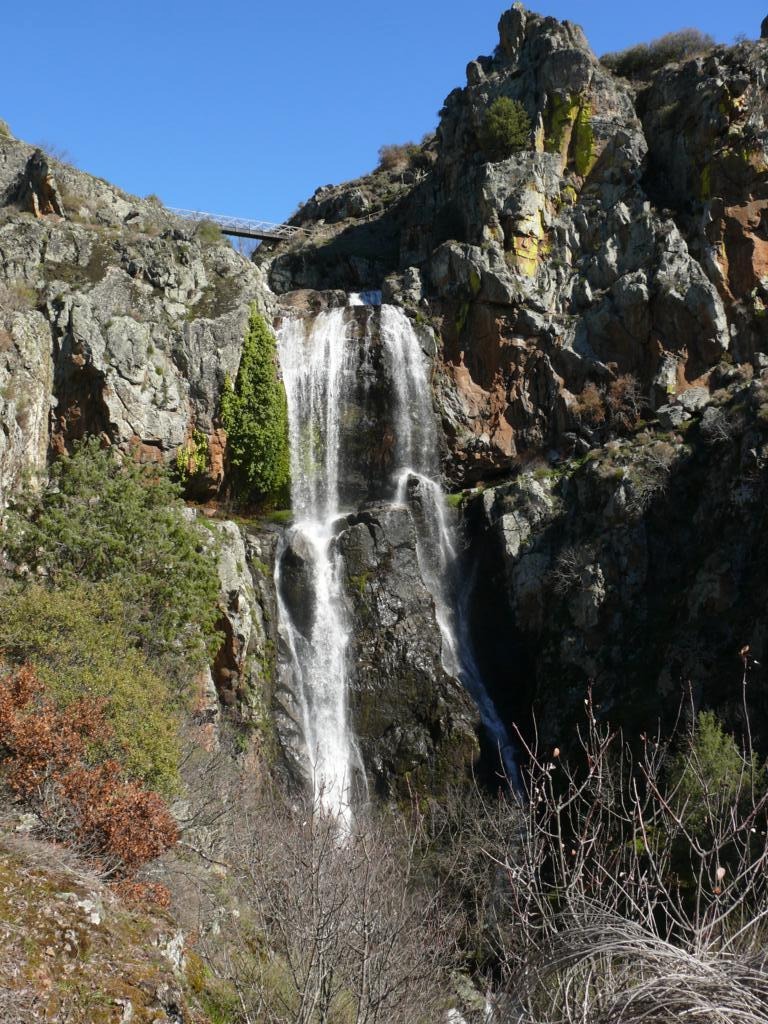
Image by jcgm published on https://es.wikiloc.com/
It is approximately half an hour by car from Fermoselle and is a particularly interesting excursion for those who want to combine nature with a short trip to the neighbouring country.
To get there, you will need to head towards Bemposta and continue to the village of Lamoso, where the walking route begins.
The first section follows a forest track for approximately 1.5 kilometres until you reach a wooden shelter. From there, a descent begins, during which you should pay particular attention to the gradient and follow the trail signs correctly.
The route leads to a wooden bridge from where the waterfall comes into view.
The Falla de Agua Alta stands out for its impressive drop of around 60 metres, plunging down the rock face to create one of the most striking landscapes in this border area.
There is also a signposted trail that allows you to approach the viewpoint and admire the waterfall from another perspective.
Is it a difficult route?
It is not a particularly difficult route, but the gradient makes it advisable to wear footwear with good grip and walk carefully, especially if the ground is wet.
Once you have enjoyed the waterfall, you need to retrace your steps and return to the starting point through holm oaks, scrubland and olive trees.
Tip: if you are doing this excursion from Fermoselle, remember that you are crossing into Portugal. Check the conditions of the route beforehand and plan your day taking the local time into account.
2. La Escalá Waterfall: an excursion very close to Fermoselle
If you are looking for a waterfall near Fermoselle and do not want to travel far, La Escalá is one of the best options.
It is located just a few kilometres from Fermoselle and offers an easy excursion through a landscape that is truly representative of the Arribes del Duero.
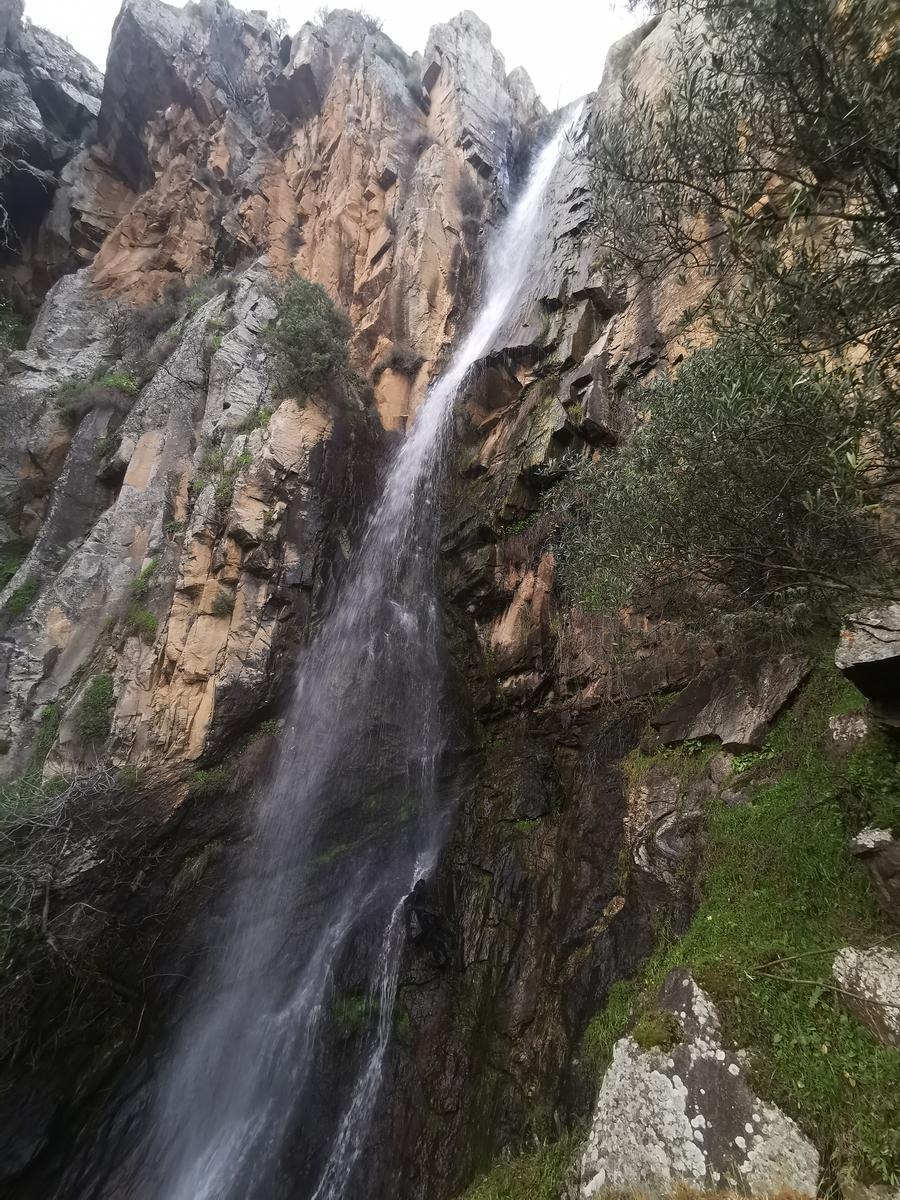
Image by diguiz published on https://es.wikiloc.com/
One of the advantages of this route is that you can start the walk practically from the surrounding area of the village. The route follows the Camino de la Carrera Olivos, through country lanes, traditional stone buildings and native vegetation.
During the walk, you can enjoy the landscape of the Arribes without having to tackle a particularly demanding route.
It is therefore a good alternative for those travelling with their family or simply looking to spend a few hours walking and discovering the surroundings of Fermoselle.
A route to enjoy at your own pace
On this type of excursion, the aim should not be to reach the waterfall as quickly as possible.
The path itself is part of the experience.
The stone walls, olive groves, vegetation and tranquillity of the surroundings provide an insight into how life has traditionally developed in the Arribes.
If you are staying in Fermoselle, you can ask your accommodation for information about access and the condition of the path before setting off.
3. Desgalgadero Waterfall: nature, wildlife and old mills
We travel to Villarino de los Aires, in the province of Salamanca, to discover the Desgalgadero Waterfall.
It is located around 28 kilometres from Fermoselle and is a very interesting excursion to combine with other places of interest in the Salamanca area of the Arribes.
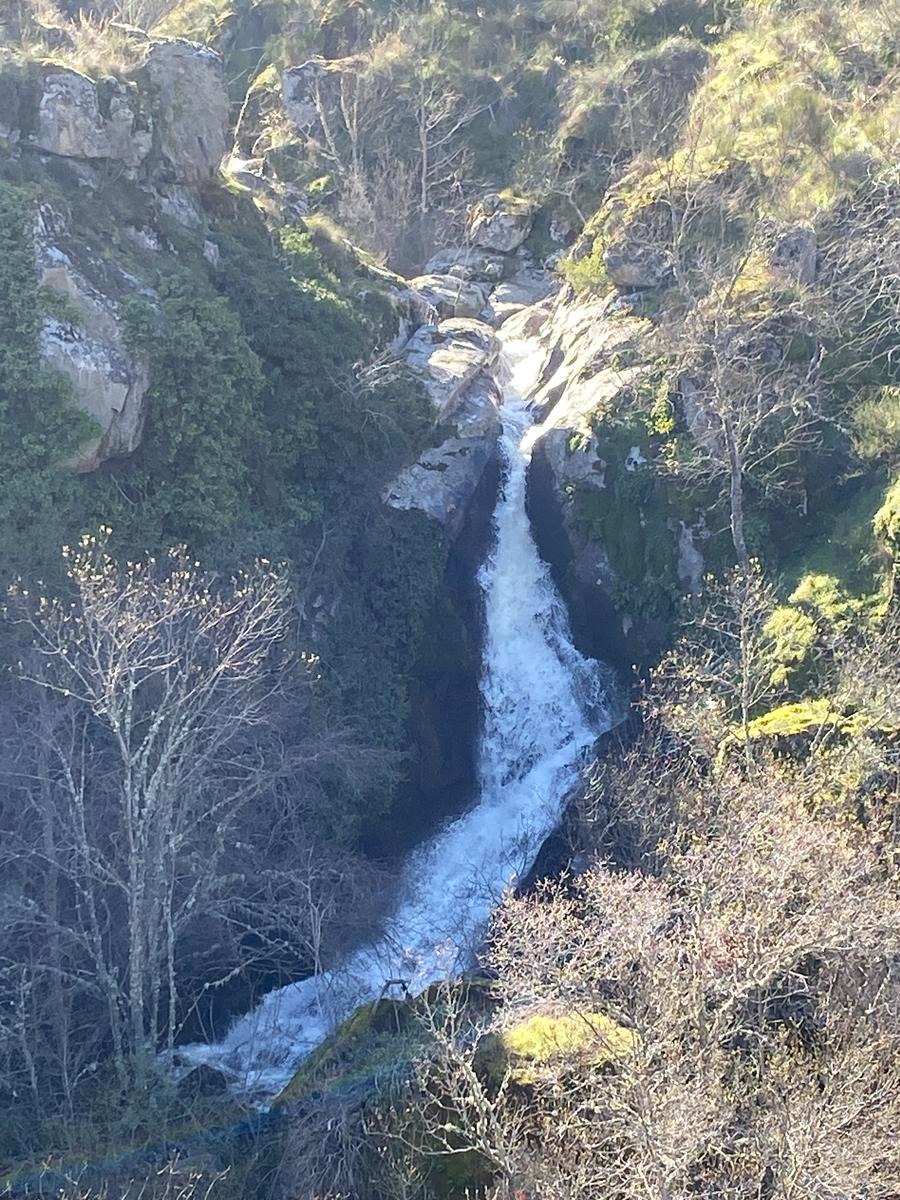
Image by Gelo61 published on https://es.wikiloc.com/
Access is by road to the vicinity of the route, after which you need to continue on foot along agricultural paths.
One of the most attractive features of the route is the landscape itself.
The old stone enclosures, vegetation and country paths create a setting that allows you to discover the traditional architecture of this part of the Arribes.
In addition, the route is marked with white arrows, although it is always advisable to pay attention to the signs and not leave the established trails.
Caution in the waterfall area
The most delicate part of the route is precisely next to the water.
The rocks can remain wet for long periods and become slippery, so it is not advisable to approach the edge or attempt to access areas outside the trail.
The surroundings also stand out for their natural richness. With a little luck, you may spot different species of wildlife associated with the woodland and riverside vegetation.
The waterfall and the remains of the old mill make this excursion particularly appealing to those who enjoy combining nature and history.
4. Churriones Waterfall: the waterfall of the River Tormes
A few kilometres from Fermoselle, we find another waterfall worth visiting: the Churriones Waterfall.
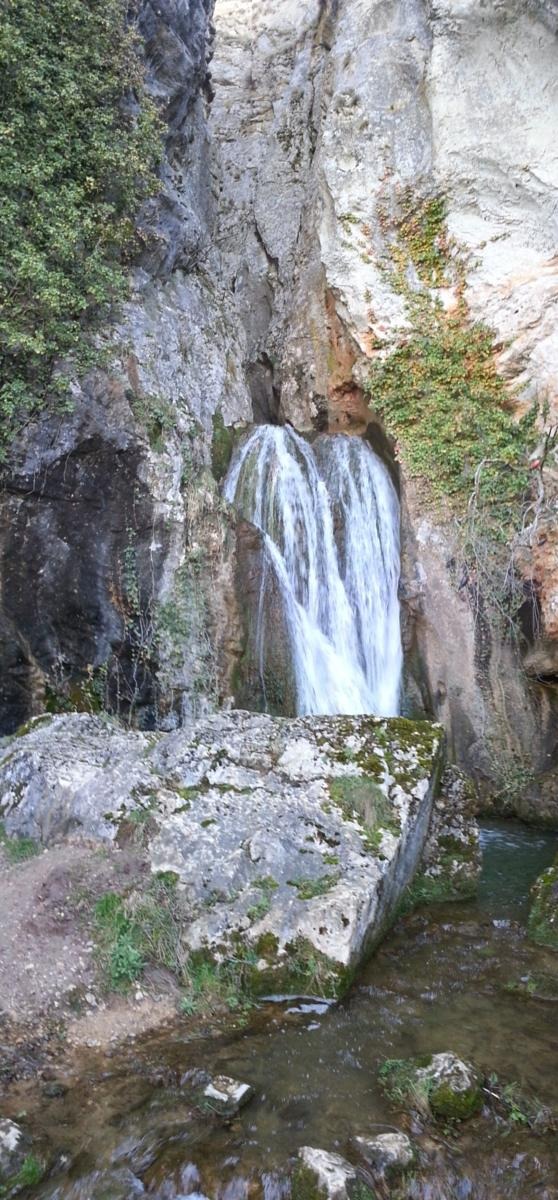
Image by angelbur published on https://es.wikiloc.com/
The access point is on the road connecting Fermoselle with Trabanca, and the excursion takes you into an area where water once again takes centre stage.
The waterfall has a double drop of approximately 30 metres and is associated with the course of the River Tormes and the Valduercos stream.
It is a particularly interesting option after periods of rain, when the flow allows you to appreciate the force of the water more clearly.
An easy excursion near Fermoselle
One of its main advantages is its proximity and the simplicity of the route.
You do not need to dedicate a full day to visiting it, so it can be combined with other visits in the area.
If you go during the colder months, remember that areas close to the water can be quite damp. Wearing warm clothing and suitable footwear will make the experience much more comfortable.
5. Cicutina Waterfall: nature and views over Fermoselle
Another waterfall you can visit from Fermoselle is the Cicutina Waterfall, located beside the River Tormes.
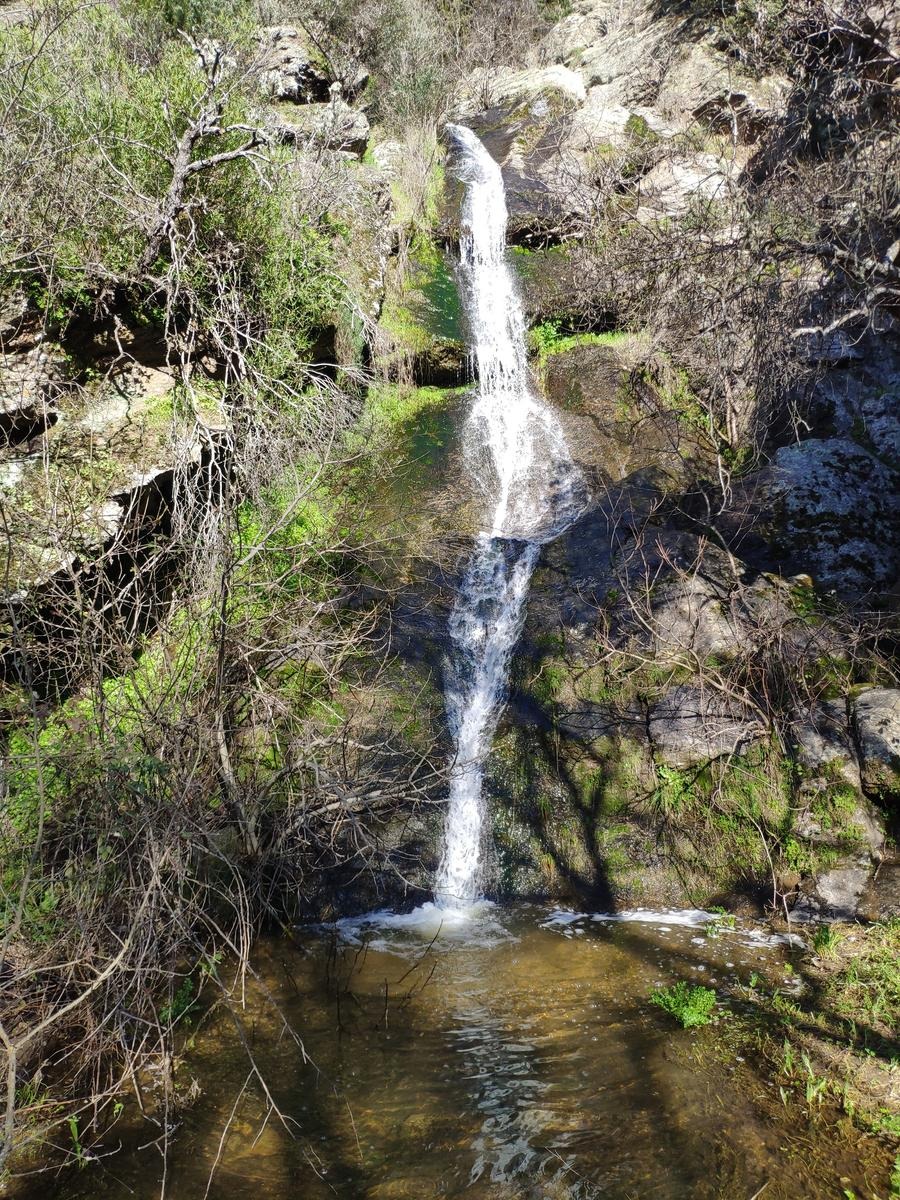
Image by cabezadelcaballo published on https://es.wikiloc.com/
To get there, take the ZA-316 towards Salamanca and turn off towards the Fuente de San Lorenzo area.
The route begins near an iron cross and continues on foot towards the waterfall.
One of the particular features of this excursion is that the path not only allows you to discover the waterfall. It also offers beautiful panoramic views over Fermoselle and the landscape of the Arribes.
At certain points, you will find areas where you can stop to rest and enjoy a small outdoor snack.
A walk among aromatic plants
Vegetation takes centre stage throughout the route.
Oregano, thyme, juniper and other species characteristic of the area accompany hikers as they make their way along the path.
It is precisely these kinds of details that make a route through the waterfalls of the Arribes much more than simply visiting a waterfall.
It is an opportunity to walk, observe the landscape and switch off from the usual pace of life.
6. Pozo de los Humos: the most famous waterfall in the Arribes
If there is one waterfall that cannot be missing from any list of natural places to visit in the Arribes del Duero, it is the Pozo de los Humos.
Located in the area around Pereña de la Ribera and Masueco, in Salamanca, this spectacular waterfall is formed by the waters of the River Uces and has a drop of more than 50 metres.
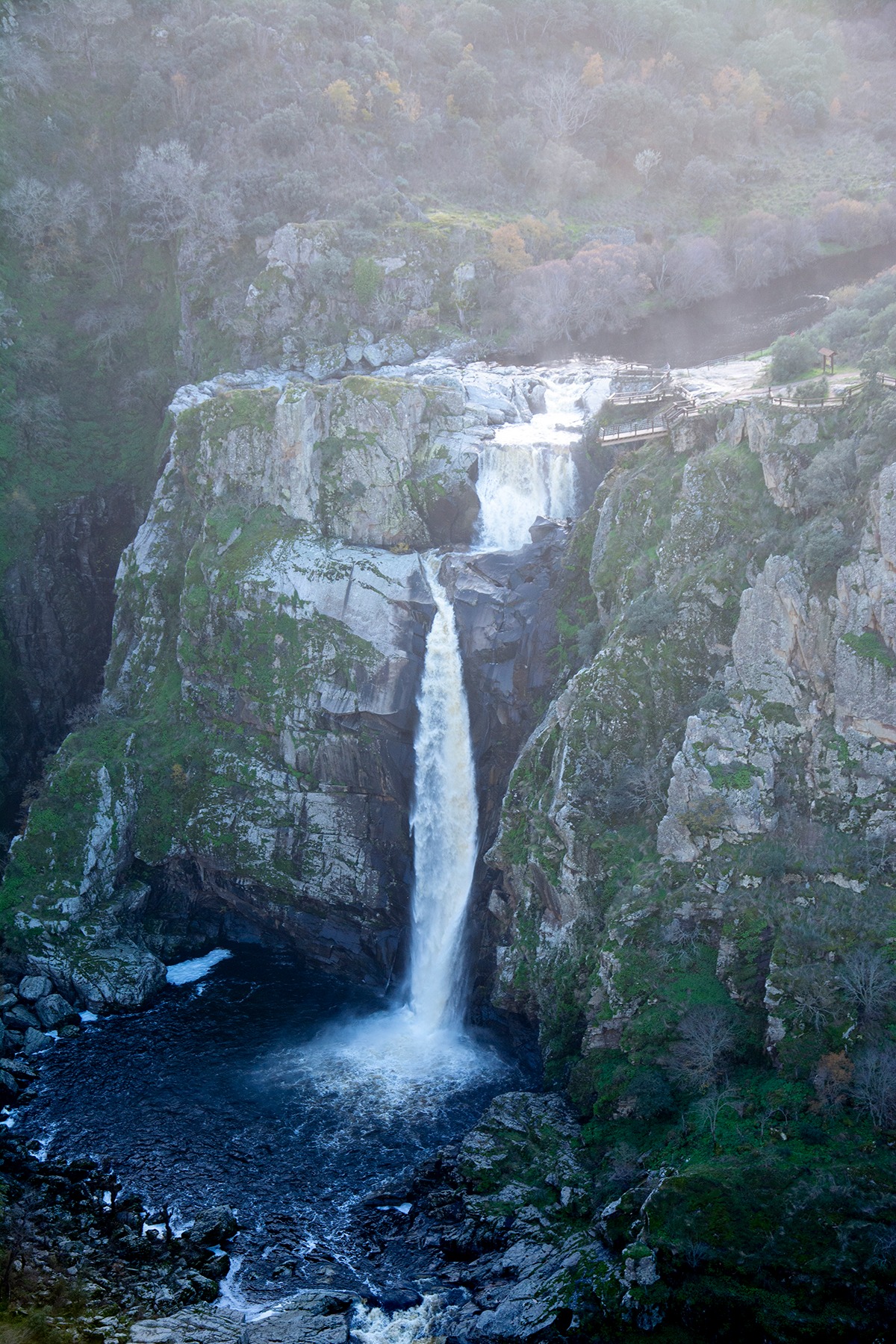
Its name comes from the cloud of spray that forms when the water plunges forcefully onto the rocks.
When conditions are good, the spectacle is impressive.
The water plunges down the rock face while the vegetation and deep canyon create a setting that looks as though it has come straight out of a film.
How can you visit Pozo de los Humos?
The best option is to leave your vehicle in the designated area and continue on foot to the viewpoint.
There is no need to approach dangerous areas to enjoy the landscape. In fact, the view from a certain distance allows you to appreciate the scale of the waterfall much better.
In areas close to the cliff edge, it is essential to follow the signs and keep a safe distance from the edge.
When does Pozo de los Humos have the most water?
The flow depends directly on rainfall and the conditions of the River Uces.
Therefore, if your aim is to see the waterfall at its most spectacular, check recent weather conditions before travelling there.
There is nothing more frustrating than travelling several kilometres expecting to find a spectacular waterfall and arriving after weeks without rain.
7. Pinero Waterfall or Cola de Caballo
In the municipality of Masueco de la Ribera, we find another of the most curious waterfalls in the Arribes: the Pinero Waterfall, also known as the Cola de Caballo Waterfall.
It is a particularly recommended spot during periods of rain, when the water level rises and the waterfall shows all its appeal.
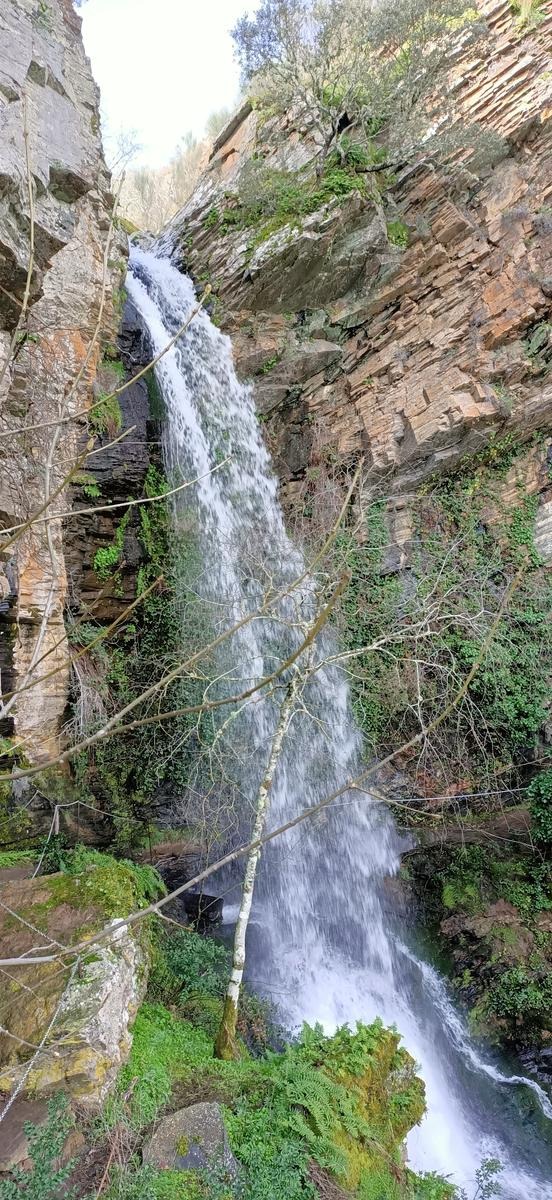
Image by Mangeljara published on https://es.wikiloc.com/
Access is from Masueco, following the route signs.
The trail allows you to see how the waterfall gradually appears among the vegetation until you reach the point where the water plunges over different rock ledges.
The waterfall consists of several drops, including one of approximately 15 metres and another of around 8 metres.
A different kind of waterfall: you can walk behind the water
One of the peculiarities of the Pinero Waterfall is the possibility of approaching a point from which you can see the water from behind.
It is a very different experience from observing a waterfall from a conventional viewpoint.
That said, the terrain can be wet and slippery. In some sections you will find chains and ropes that help you move forward, but they should be used as support and not as a guarantee of safety.
If you are travelling with children, pay particular attention.
8. Lastras de Agua Brava Waterfall: a hidden corner of Zamora
We finish our selection with one of the most interesting waterfalls for those who want to discover lesser-known corners of the Arribes: the Lastras de Agua Brava Waterfall, located near Mámoles, next to Fariza.
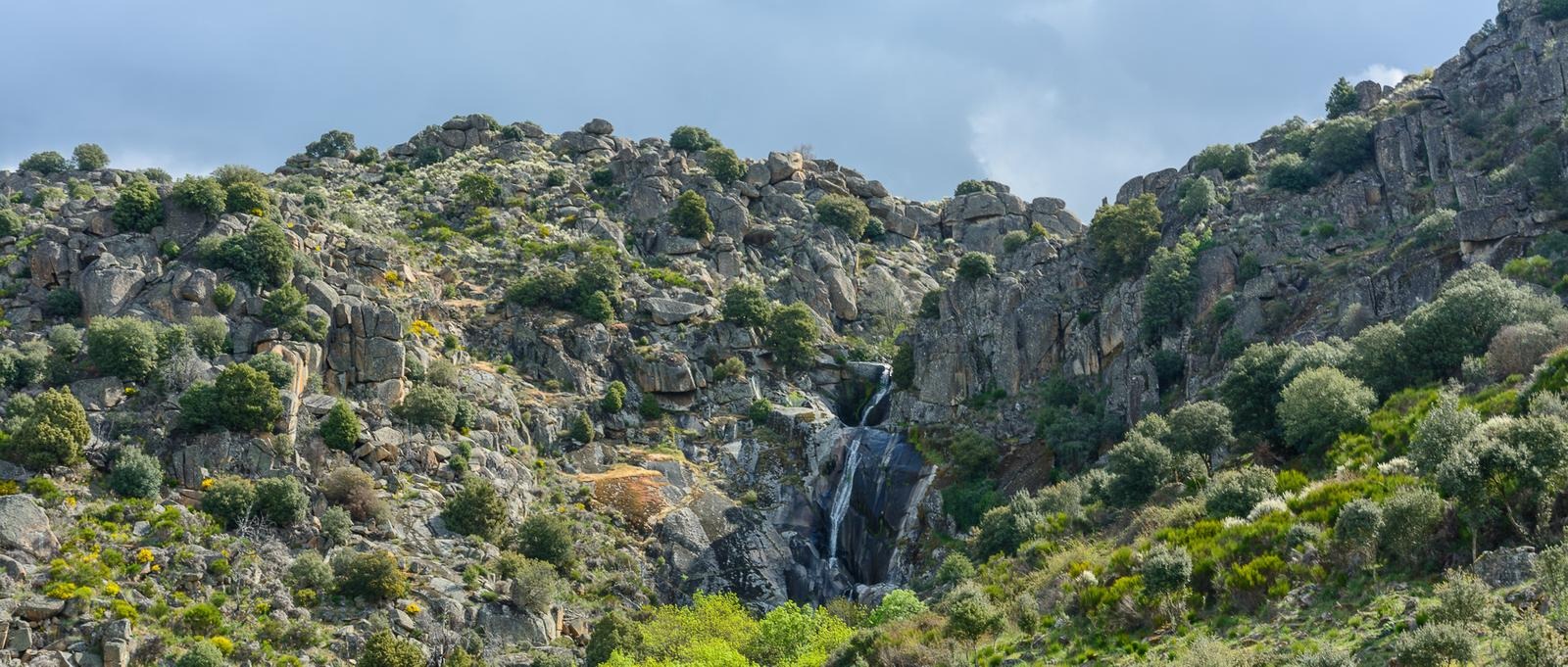
Image by lasendadelduero published on https://es.wikiloc.com/
This spot stands out for combining a hiking route, traditional architecture and a spectacular landscape of rock and water.
From Fermoselle, it can be reached in approximately half an hour by car, depending on the starting point and road conditions. Once in Mámoles, the walking route begins.
The route is around 5.4 kilometres there and back and runs through meadows, rocky areas, small streams and paths bordered by traditional stone enclosures.
The waterfall has an approximate drop of 15 metres and is particularly spectacular during the months with the highest rainfall.
El Mirador del Testero del Burro
One of the advantages of this excursion is that you can complement your visit to the waterfall with the Mirador del Testero del Burro, from where you can enjoy a spectacular panoramic view of the Duero enclosed between granite walls.
In addition, the surroundings are interesting for observing birds of prey and other species typical of the Arribes.
Therefore, if you enjoy nature photography or birdwatching, this may be one of the most complete excursions on the list.
Other waterfalls and water routes you can discover in the Arribes
The eight suggestions above are an excellent selection to get you started, but the Arribes del Duero hide many more places associated with water.
One of the advantages of staying in Fermoselle for several days is that you can combine these excursions with other hiking routes and viewpoints in the area.
For example, on the Posada Doña Urraca website itself, you can find more information about the Abelón Waterfall, a route of approximately 6 kilometres there and back that allows you to discover the waterfall formed by the Cunca stream and can be completed in around 2-3 hours.
It is also worth discovering the Ribera de los Molinos Route and Las Barrancas Viewpoint, an alternative that combines hiking, landscape and traditional heritage.
In this way, you can create your own waterfall route through the Arribes according to the time available.
Can you visit all the waterfalls in the Arribes in one day?
It is not the most advisable option.
Although some are very close to one another, each excursion requires travelling, parking and walking time.
Furthermore, trying to visit too many places in a single day can make the experience lose precisely what makes the Arribes so special: tranquillity.
If you only have one day
You can focus on the waterfalls closest to Fermoselle and choose one or two excursions.
A good combination could be:
Fermoselle → La Escalá Waterfall → Churriones Waterfall → Cicutina Waterfall
This way, you will have time to walk at your leisure and return to Fermoselle for lunch or to rest.
If you have a weekend
You can extend the route and spend one day in the Zamora area and another in the Salamanca area of the Arribes.
For example:
Day 1: Fermoselle + La Escalá + Churriones + Cicutina.
Day 2: Pozo de los Humos + Pinero Waterfall + Desgalgadero.
And if you have more time, you can add Abelón, Lastras de Agua Brava or Falla de Agua Alta in Portugal.
Where to stay for a waterfall route through the Arribes?
One of the best ways to enjoy this experience is to stay in Fermoselle and use the town as a starting point for the different excursions.
Its location allows you to organise different routes over several days without having to change accommodation constantly.
After spending several hours walking along trails, over rocks and alongside streams and waterfalls, returning to a peaceful place to rest is part of the experience.
At Posada Doña Urraca, in Fermoselle, you can turn your visit to the waterfalls into a complete getaway in the Arribes del Duero.
The inn is housed in a stone building with traditional architecture and offers an atmosphere designed for relaxing after exploring the surrounding area.
In addition, if you do not feel like getting back in the car to find somewhere to eat after your route, you can enjoy the restaurant's gastronomic offering and try local products and recipes.
This allows you to organise your day very easily:
morning hiking → lunch in Fermoselle → afternoon exploring the village or relaxing → evening at the inn.
And the following day, start a new route towards another of the waterfalls in the Arribes.
